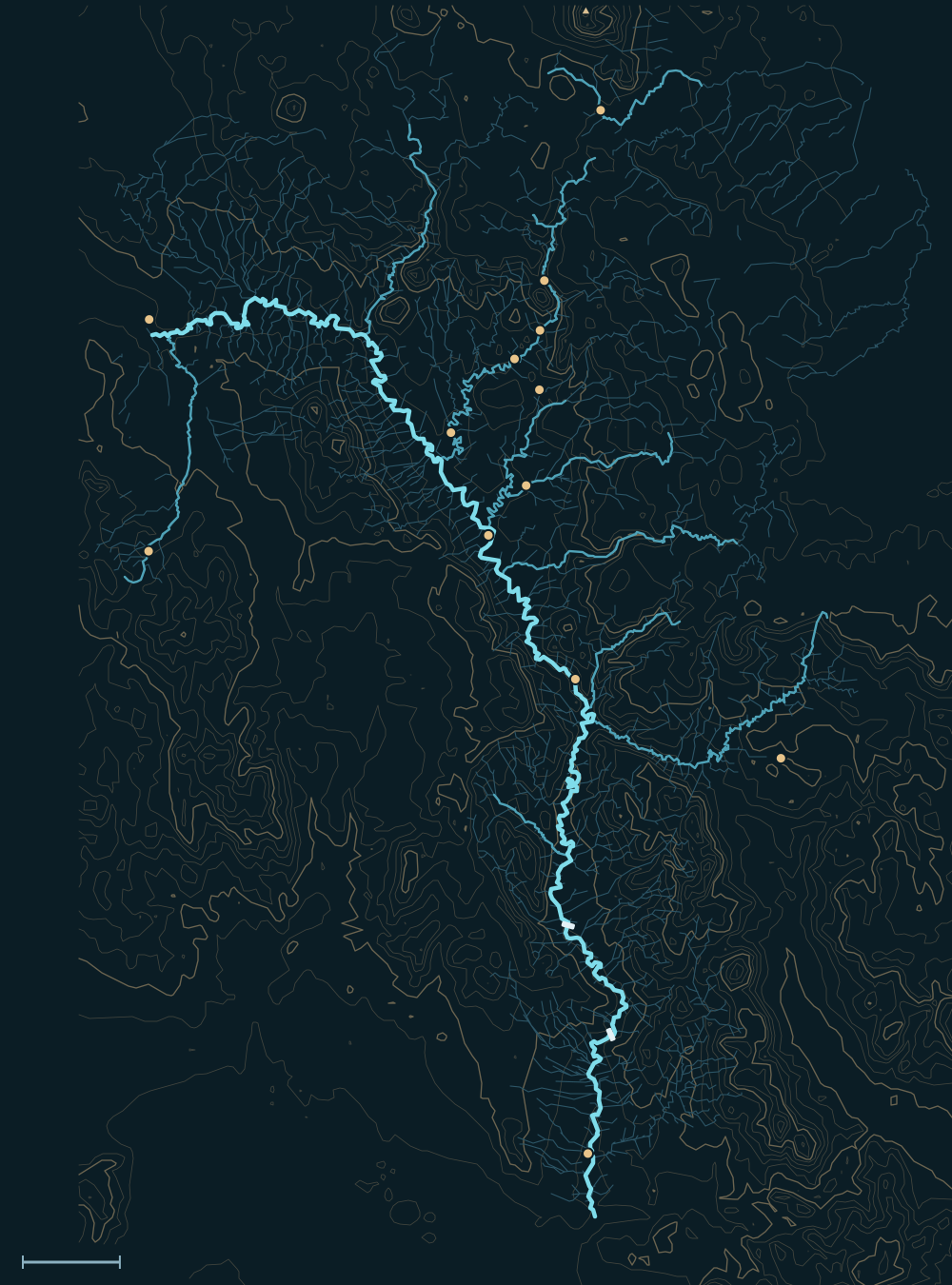
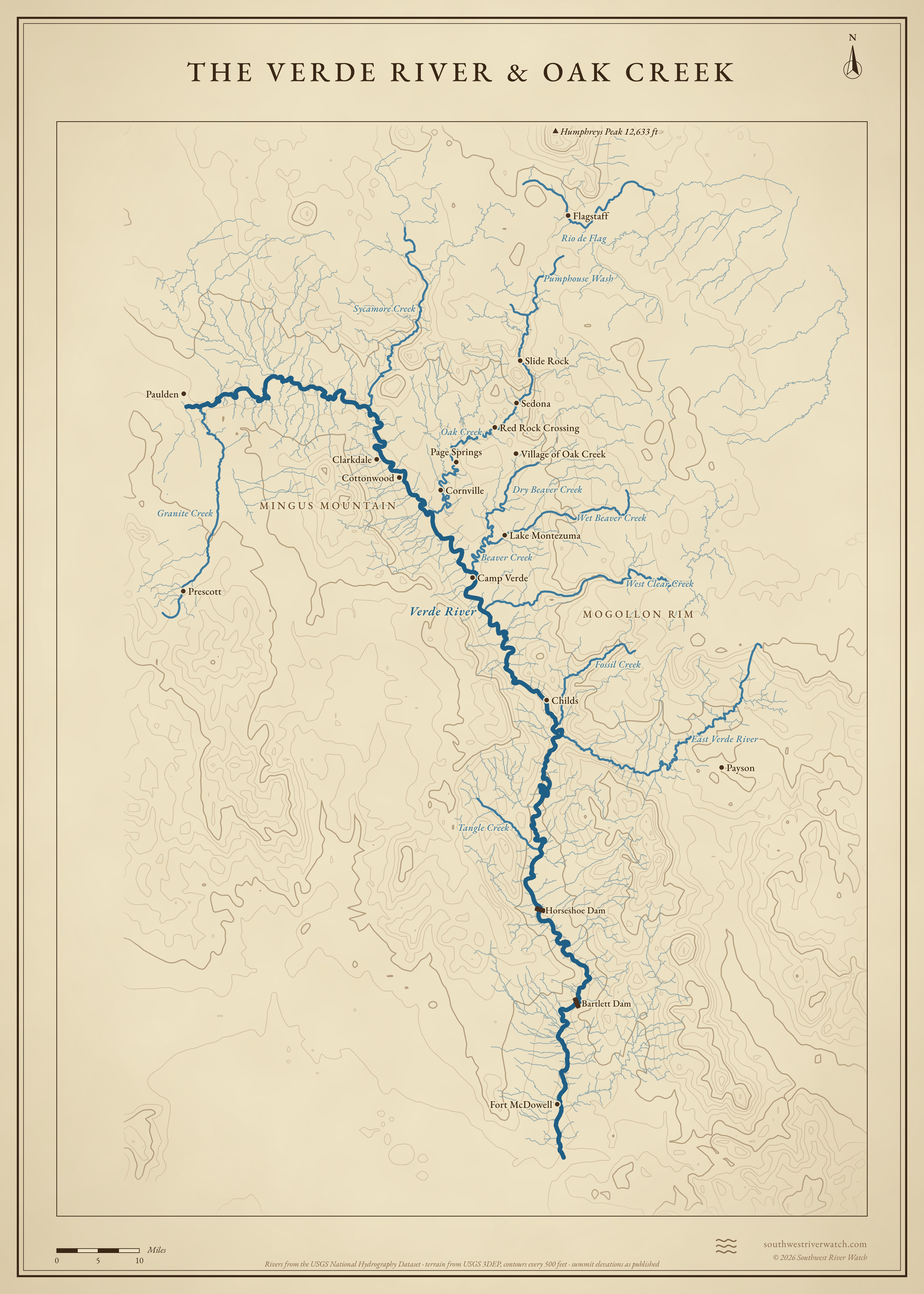
The Verde Valley's river and Sedona's Oak Creek, fed from the Mogollon Rim and the San Francisco Peaks; Flagstaff's Rio de Flag drains the other way, to the Little Colorado.
The Exodus, 1875
In 1871 the government set aside the Rio Verde Reservation, about 900 square miles of the valley from Camp Verde up to Paulden, and General George Crook moved Yavapai and Apache people onto it.
In February 1875 the reservation was closed. About 1,400 people were marched 180 miles in winter to the San Carlos reservation, across rivers and mountains. When they were finally allowed to leave, in 1900, only about 200 made it back to the Verde Valley. The Yavapai-Apache Nation remembers the march each February as Exodus Day.2,3
The flagstaff
On July 4, 1876, a party of settlers from Boston camped at a spring below the San Francisco Peaks cut a tall ponderosa pine, stripped its branches and raised a flag on it for the nation's centennial. The pole became a landmark for travelers and railroad crews, and the town that grew up there was named Flagstaff by 1881. Others claim earlier flag trees, raised by railroad surveyors in the 1850s.4
Jan–Feb 1993
Winter storms brought the largest flood of the gauge record on the lower Verde in January and the second largest in February; Horseshoe Dam let out about 110,000 cfs at the January peak.7,8
Flagstaff's Rio de Flag
Early Flagstaff flooded several times, and the Rio de Flag was later buried and channeled through town. The Southside still floods: a big flood would damage about 1,500 buildings, and the city and the Army Corps of Engineers are enlarging the channel (about $121 million).10,11,12