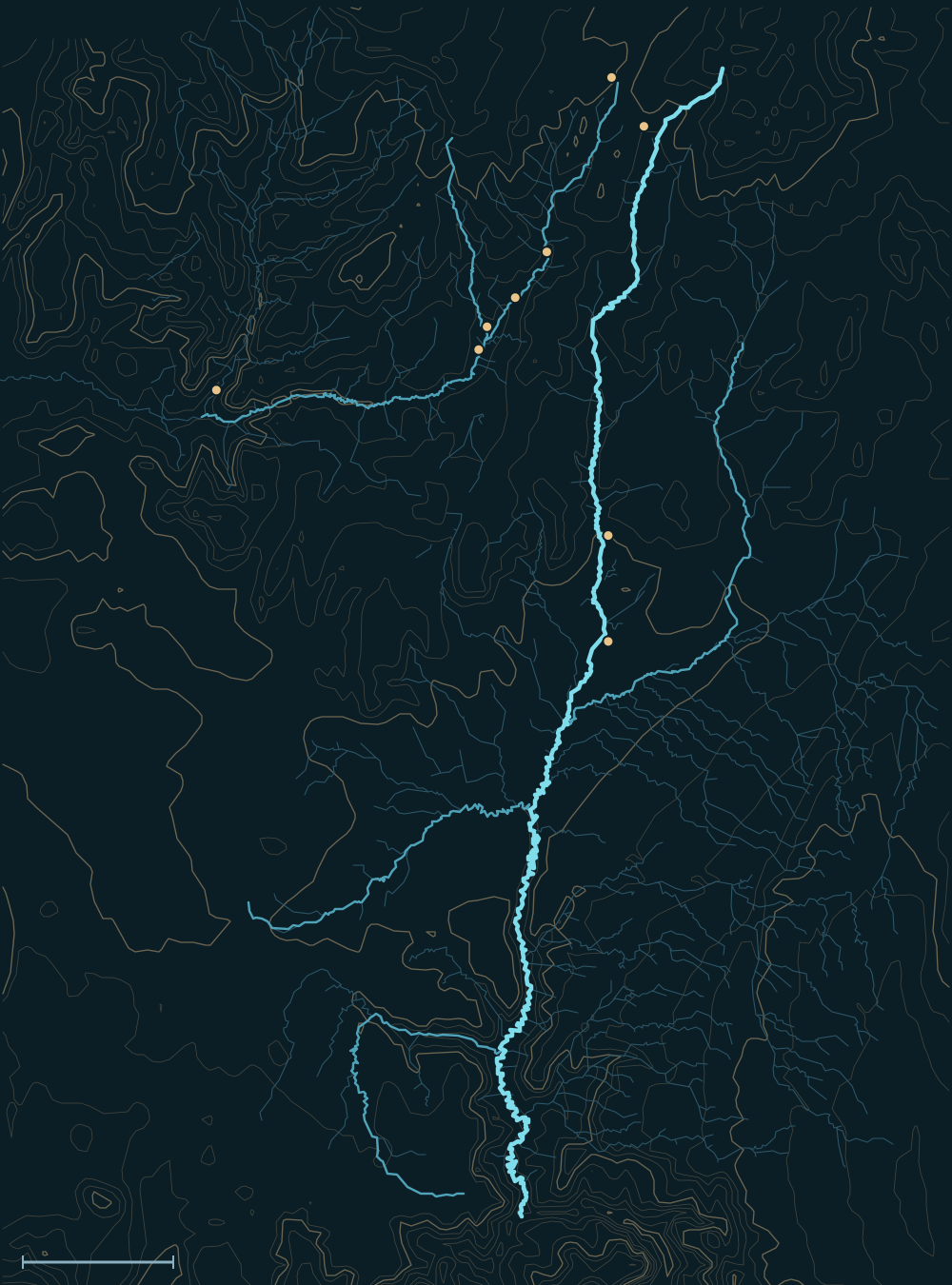
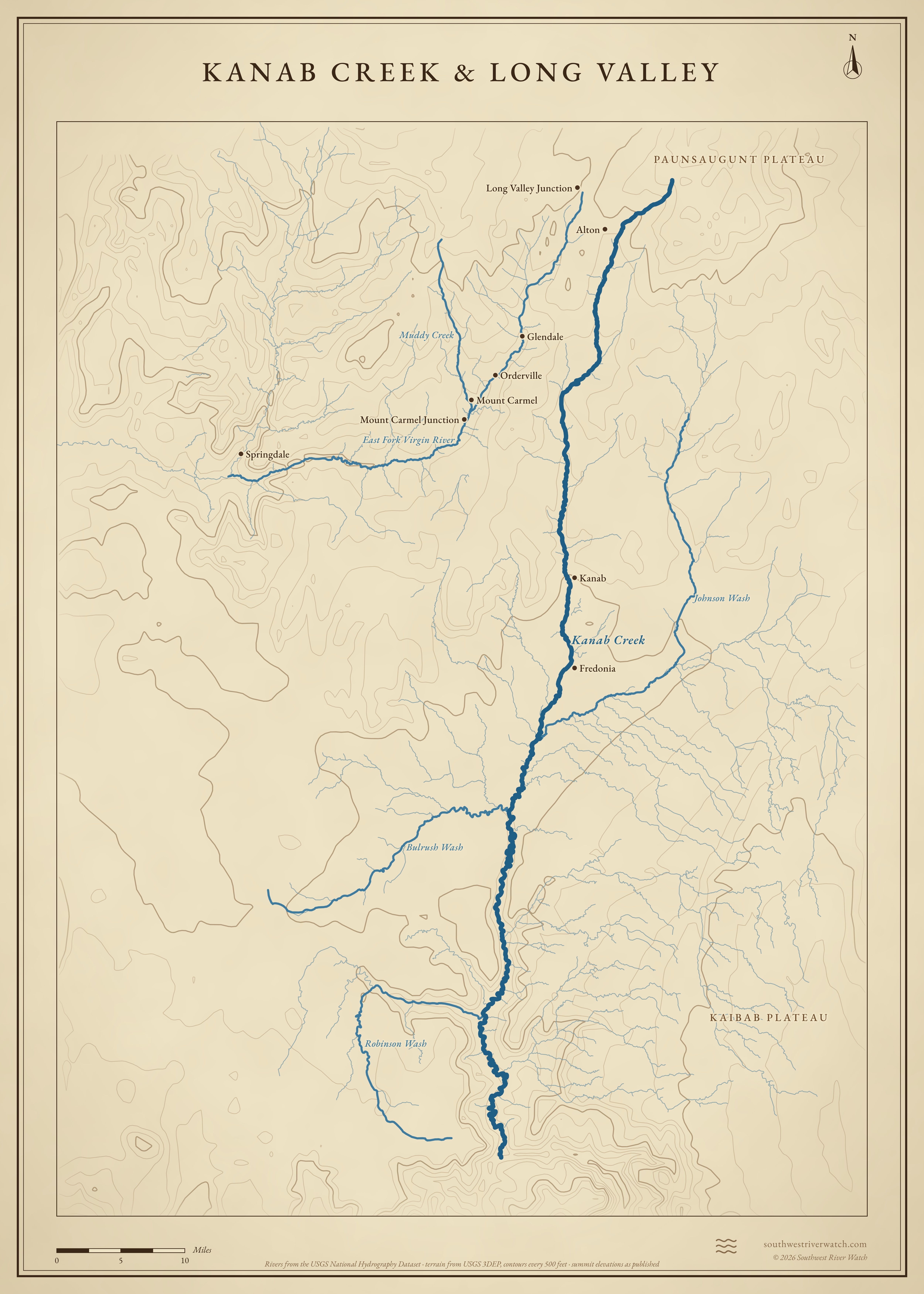
Two streams off the same high country north of Kanab: the East Fork of the Virgin through Long Valley, and Kanab Creek through Kanab and Fredonia to the Grand Canyon.
The killing spring of 1866
In January 1866 word reached St. George that raiders had run off cattle and sheep from James Whitmore's ranch at Pipe Spring, on the Arizona Strip west of Kanab Creek. Whitmore and his hand, Robert McIntyre, rode out to check the stock and never came back. The militia that went after the raiders blamed the Paiutes and killed some they found butchering one of Whitmore's cows; the Park Service now says the raid was Navajo, and that friendly Paiutes guiding the militia were sometimes mistaken for hostiles and shot.
On April 2, Robert Berry of Berryville, his wife Isabelle and his brother Joseph were crossing the Strip by wagon when they were ambushed in a draw about four miles from Maxfield's ranch on Short Creek. Two more brothers, John and William, found the bodies days later. Family tradition says the men were full of arrows and that Isabelle, dead in the wagon, was carrying their first child. All three were buried at Grafton, on the Virgin, under stones that say they were killed by Indians. Revenge for the Paiutes the militia had killed may have been the reason.
Brigham Young ordered the Long Valley settlers out, and militia came from Cedar City to escort them back to Dixie. Fort Kanab and Pipe Spring were left empty that summer.5,6,7,8,21,22
Fire in Fort Kanab
Levi Stewart brought the first resettlement company back to Kanab in June 1870 and became its bishop. On the night of December 14, 1870, fire broke out in the fort room where six of his family were asleep. His wife Margery, 38, and five of their sons, aged 7 to 22, died; one account says the man on guard had fallen asleep. A younger boy, Alonzo, survived. A nine-foot bronze of Stewart stands in Kanab today.9,23,4
Orderville and the great pants rebellion
Orderville ran on the United Order: one dining hall, identical houses, and clothing made on the town's own looms, down to homespun trousers. The boys at Mount Carmel, next door, laughed at them.
One young man had had enough. He sold wool (by one telling, from the docked tails of lambs) and bought a pair of store-made pants in Nephi. The Board of Management ruled the pants community property and took them, and the tailors cut a pattern from them. Local boys were said to wear out the seats of their homespun on a grindstone to earn new ones. The elders gave in, began buying cotton cloth and let the tailors follow the new styles.
By 1885, strained from within and squeezed by federal laws against polygamy, Orderville auctioned off its common land. It was Utah's longest-running United Order.24,25,26
Fredonia: across the line
After the Edmunds Act of 1882, federal marshals hunted polygamists through southern Utah. In 1885 families from Kanab moved a few miles south, across the Arizona line onto Kanab Creek, and founded Fredonia; a safe house on the underground that hid polygamists from the law was reportedly in Fredonia. The name is an old coinage from “freedom.” The story that it means “free women” is folklore.15,16
Petticoat government
On November 7, 1911, Kanab voters elected an all-woman town council: Tamar Hamblin, Luella McAllister, Blanche Hamblin, Vinnie Jepson and Mary Chamberlain, who as chair was mayor, the first woman mayor in Utah. They served a term, and the next election went back to an all-male slate. Kanab often claims the nation's first all-woman council; Oskaloosa, Kansas, elected one in 1888.17,18
Roping lions on the Kaibab
Around 1908 the plainsman Buffalo Jones took a young dentist-turned-writer named Zane Grey to the Kaibab Plateau, above Kanab Creek's canyon, to rope mountain lions alive. Grey wrote it up as The Last of the Plainsmen, and the country and the people he met on that trip fed Riders of the Purple Sage.27
Little Hollywood
Director Lynn Reynolds brought Tom Mix to Kanab in 1924 for The Deadwood Coach. In 1931 Whit, Chauncey and Gronway Parry opened Parry Lodge, then went to Hollywood to sell the red cliffs to studios, offering to house, feed and haul the crews. More than a hundred films and TV shows followed; John Wayne, Ronald Reagan, Barbara Stanwyck and Ava Gardner stayed in town, and Gunsmoke shot episodes in Johnson Canyon, on Kanab Creek's biggest side wash.19,20,10
1883 and after: Kanab Creek cuts its arroyo
The flood of July 29, 1883 was the first to do serious damage; in the years after, the creek kept cutting until a gully tens of meters deep ran through the valley where the town had farmed. Whether grazing, the storms or both set it off is still argued.12,13